

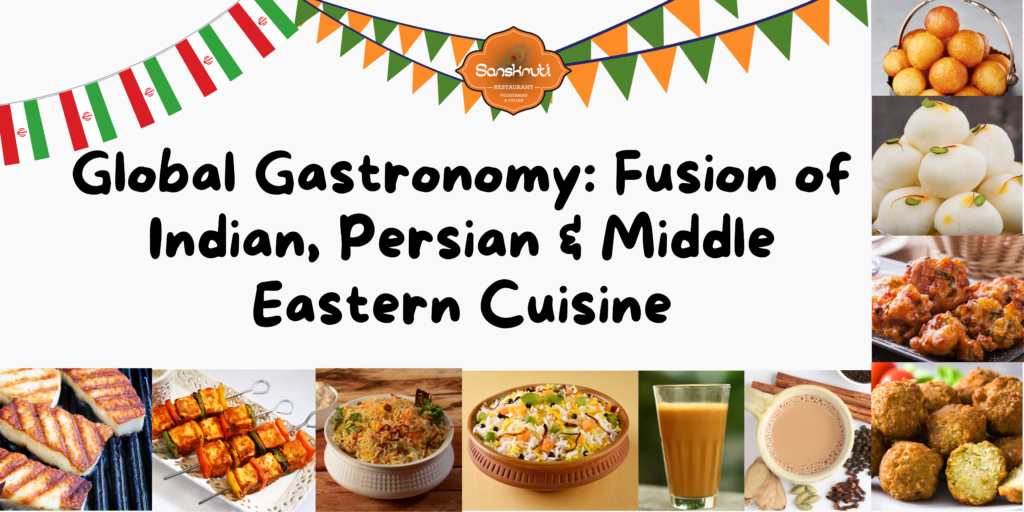
Global Gastronomy: Fusion of Indian, Persian & Middle Eastern Cuisine
The Root of it All: Where It Began
Indian vegetarian cuisine has deep historical roots, with the first documented evidence of its existence dating back to around 6th century BC. The concept of “ahimsa” or non-violence, championed by Mahatma Gandhi, has significantly contributed to the popularity of vegetarianism in India. Persian cuisine, on the other hand, has a history that dates back to ancient Persia (modern-day Iran), making it one of the oldest culinary traditions in the world. In the Middle East, a rich blend of influences, from the Ottoman Empire to the Mediterranean, has resulted in a diverse and flavourful culinary heritage.
Flavours That Connect
While the spices and ingredients used in Indian vegetarian dishes may vary from their counterparts in Persia, the Middle East, and other countries, the flavours they create often share striking similarities. Let’s explore a few examples.
- Biryani vs. Persian Jeweled Rice: Indian Biryani and Persian Jeweled Rice, both known for their fragrant saffron-infused rice, are cousins in the world of pilaf. They share a common theme of using aromatic spices and nuts, creating a symphony of flavours that excite the palate.
- Paneer Tikka vs. Middle Eastern Halloumi: Paneer Tikka, a beloved Indian dish, is remarkably similar to Middle Eastern Halloumi cheese, both of which are grilled to perfection and served with vibrant accompaniments. The common thread here is the irresistible char and the subtle blend of spices.
A Delectable Duo: Tea Tales
Tea, a beloved beverage worldwide, has a unique place in both Indian and Persian culture. While Indian tea culture boasts Chai, the Middle East is known for its traditional tea, often called “Chai Karak.” The two beverages are more alike than one might think.
- Indian Chai: Chai is a delightful blend of black tea, milk, and spices, often including cardamom, ginger, and cinnamon. The strong and aromatic flavors have made Chai an essential part of Indian culture, where it’s sipped throughout the day.
- Persian Chai: In Persian culture, tea, or “Chai,” is served in small glasses, typically alongside a variety of sweets, creating a lovely contrast of flavors. Similar to Indian Chai, Persian Chai is brewed strong, but it is typically less spiced, allowing the pure tea flavor to shine.
A Global Vegetarian Feast
Indian vegetarian cuisine, with its rich assortment of dishes, has transcended borders and influenced the way people around the world enjoy their meals. Let’s explore some global adaptations and their Indian counterparts.
- Falafel vs. Indian Pakoras: Falafel, a Middle Eastern staple, is made from ground chickpeas or fava beans, mixed with herbs and spices, then fried to perfection. In India, we have a close cousin known as Pakoras (fritters), where vegetables are coated in spiced gram flour batter and deep-fried.
- Hummus vs. Indian Chutneys: Hummus, a creamy dip made from chickpeas, tahini, and various seasonings, is widely popular in the Middle East. In India, chutneys serve a similar purpose, offering a burst of flavor alongside main dishes.
- Kebabs vs. Tikkas: Kebabs from the Middle East and Tikkas from India share the love for skewered, marinated, and grilled pieces of meat or vegetables. The blending of spices and grilling methods gives a tantalizing smoky flavor that unites them.
The Sweet Connection
Desserts, an integral part of any cuisine, also exhibit remarkable similarities. Indian sweets like Gulab Jamun, Rasgulla, and Jalebi find cousins in Persian and Middle Eastern desserts.
- Gulab Jamun vs. Persian Zoolbia and Bamieh: Gulab Jamun, a soft milk-based dessert soaked in sugar syrup, shares similarities with Persian Zoolbia and Bamieh. These Persian pastries are also fried, sweet, and dripping with syrup.
- Rasgulla vs. Middle Eastern Lokma: Rasgulla, a spongy cheese ball soaked in sugar syrup, is reminiscent of Middle Eastern Lokma, bite-sized doughnuts soaked in syrup.